

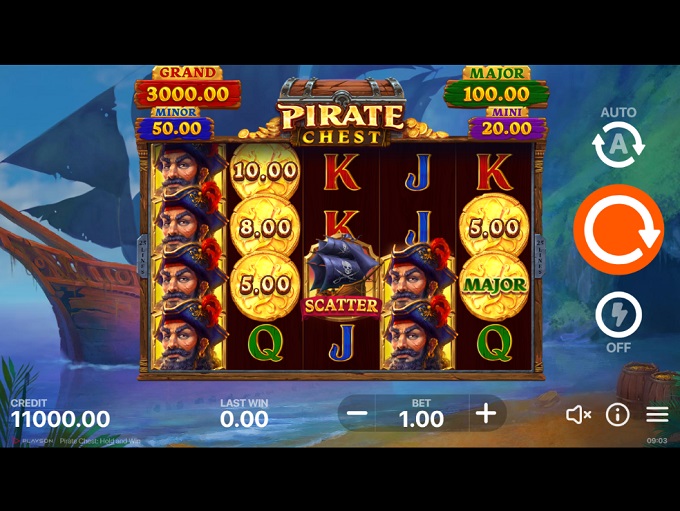
We examine how one small icon reshapes an entire gaming session. In the holdandwingame Games, the scatter symbol is far more than a simple payout trigger. It is the architect of the most anticipated feature, directly activating the respin sequence where sticky symbols cling to the grid. For UK players, understanding these scatter mechanics transforms casual spins into informed strategic choices that genuinely influence session outcomes.
Analyzing RTP and Volatility Through Scatter Activation Frequency
We assess any Hold and Win Games title by first breaking down its scatter hit rate. The theoretical RTP divides sharply between base-game returns and bonus-round contributions. By studying the scatter symbol’s appearance frequency and the average bonus value, we can model the game’s mathematical skeleton. Typically, a scatter occurs roughly once every ten to fifteen spins, with a three-scatter activation taking place every hundred to two hundred spins, though exact models vary widely across the portfolio.
Volatility is heavily influenced by how the scatter allocates its power. In low-variance Hold and Win Games, scatters deliver meaningful instant cash frequently but produce relatively shallow bonus rounds. Conversely, high-variance builds channel almost all scatter-driven value into the bonus, creating long dry periods punctuated by massive sticky-symbol accumulations. UK players can spot these profiles by examining the paytable scatter rewards and the jackpot spread within the bonus description.
We always analyze the bonus buy option where legally available in certain UK-licensed offshore variants. The cost of directly purchasing the feature reveals the operator’s internal valuation of that scatter activation. A purchase price of fifty times the stake indicates a much higher expected bonus return than a price of thirty times, given similar mechanics. This pricing transparency, even for those who never employ the feature, offers a powerful analytical window into the true strength of the scatter trigger.
Our session tracking consistently reveals that the psychological impact of scatter near-misses is substantial. Two scatters on a three-scatter activation game generate a feeling of being close, yet mathematically the final scatter remains independent. We caution UK players against fallacious reasoning here. The RTP does not change because the previous spin showed two scatters. Grasping this independence is crucial to maintaining a responsible approach while experiencing the undeniably potent bonus structures within Hold and Win Games.
How Scatters Trigger the Famous Hold and Win Bonus Round
As soon as the necessary number of scatters comes into sight, the base game instantly suspends. We then observe the shift into the special hold-and-respin arena. Typically, three concurrent scatter landings grant three initial respins. The triggering scatters often convert into the first sticky cash symbols, immediately filling the grid with locked value and restarting the spin counter back to the starting number each time a new symbol appears.
We acknowledge this reset mechanism as the main engine of the feature. Each fresh symbol that sticks resets the count back to the initial three respins. A empty sequence of three consecutive non-sticky spins exhausts the counter and closes the round. The scatter, having fulfilled its activation purpose, typically disappears or morphs into a prize-carrying tile, never reappearing as a working scatter during the bonus itself, which eliminates the possibility of retriggers but intensifies the focus on cash accumulation.
For UK players used to games controlled by the UK Gambling Commission, this no-retrigger rule within the bonus is significant. We have studied session data where bonus frequency stays transparent and predictable. The scatter’s job is finished at the threshold moment. From that point forward, only special symbols like collectors, boosters, or jackpot orbs can alter the sticky array, and the initial scatter catalyst becomes a silent trophy at the heart of the respin grid.
The exact number of scatters required occasionally shifts across different Hold and Win Games variants. Some premium titles need four scatters to unlock a super bonus with enhanced sticky symbols or assured jackpot tiers. We find that these higher thresholds significantly spike volatility. The wait becomes longer, but the eventual bonus arena is far richer, with scatters in effect doubling as a difficulty selector that determines which prize pool becomes accessible.
Sticky Scatter Symbols, Extra Spins and the Lock it Link Feature
Once the feature activates, the scatter often changes into a locked prize symbol. The term Lock it Link is widely employed to explain this specific mechanic. We note that the initial triggering scatters are the initial to lock, and their locations are permanently taken until the feature ends. This indicates the grid starts with at least three occupied cells, directly reducing the free landing zones for subsequent sticky symbols that arrive during respins.
The sticky scatter dynamic mechanic changes how we assess different grid configurations. On a five-by-three grid, three locked scatters leave twelve open cells. Each respin that delivers a new sticky symbol not only adds its prize but also restarts the timer. We analyse this as a progressive probability curve. The initial respins are generous because many free cells exist. As the grid becomes full, the likelihood of a empty spin rises dramatically, making those final few sticky prizes genuinely difficult to obtain.
UK players regularly ask us about the contrast between sticky scatters and collector symbols that combine values. The critical distinction is that the initial triggering scatter is stuck from the start and cannot be gathered, while following sticky cash symbols could be collected by a collector that appears and aggregates their values. This creates a captivating tension. The precise symbols that triggered the bonus become permanent anchors, and every thereafter attached value revolves around them.
Some Hold and Win Games editions introduce a specific super scatter that, when used as a trigger, secures a complete grid payout if every cell gets filled. We view this as the greatest demonstration of scatter power. The symbol not only starts the feature but also implicitly holds the path to the Grand jackpot. Without that particular scatter variant triggering the round, covering the whole grid might only give a lesser aggregated prize, proving how the activation symbol’s quality controls the bonus ceiling.
Sophisticated Scatter Interactions: Jackpot Levels and Gathering Symbols
We now delve into how scatters influence jackpot levels. In numerous Hold and Win Games, the bonus arena displays Mini, Minor, Major and Grand jackpot values displayed above the reels. The initiating scatters do not directly give these, but the appearance of specific jackpot orbs among the sticky symbols is enabled by the type of scatter that activated the round. A standard three-scatter trigger might never allow Grand jackpot orbs to show up at all.
A more advanced interaction takes place when scatters land with attached jackpot labels during the base game. Some titles treat these as instant jackpot wins even without complete activation. We have observed a single Major scatter land and right away credit the corresponding jackpot, entirely bypassing the bonus phase. For UK reviewers, this hybrid mechanism demands a thorough reanalysis of hit frequency. The scatter transforms into a self-contained jackpot delivery system, changing how we understand slot variance entirely.
Collector scatters represent a next evolution. These scarce symbols, when they show up during the base game, gather all visible cash values presently on the reels and then lock themselves as a aggregate value in the bonus. We consider this mechanic particularly appealing for analytical breakdowns because it merges the triggering event with a value-aggregation role. A individual collector scatter can immediately inflate the opening bonus state, rendering the subsequent respins significantly more valuable from the first spin.
We also observe persistent scatter mechanics in particular Hold and Win Games sequences. Here, scatters that do not activate the bonus add to a meter that charges over multiple spins. Once full, the next scatter secures the feature. This accumulation approach is perfectly tailored to the UK market, where responsible gambling tools and session limits are standard. Players can follow tangible progress towards a bonus, reducing the irritation of apparent near-miss scatter configurations that entice but do not provide.
The Role of Scatter Boosters and Immediate Cash Rewards
Aside from the access feature, many scatters in the Hold and Win Games library hold independent cash values visible directly on the symbol face. When they appear in the base game without a full group, they regularly grant an instant multiplier. We note a single scatter awarding one times the stake, two scatters providing a combined five times, and so on. This instant satisfaction smooths the play experience and lessens the mental gap between bonuses.
We have examined the mathematics behind these instant scatter pays. They usually add a small but critical slice of the overall RTP, sometimes up to a quarter of the total return apart from the bonus. For UK reviewers checking fairness, this clear immediate payout system renders the game mechanics simple to verify. The paytable openly declares scatter values, enabling players to compute exactly what each partial scatter landing provides before the full bonus activation takes place.
Another interesting progression involves scatters that show Mini or Minor jackpot labels instead of fixed multipliers. When these show up in the base game, they commonly grant the corresponding jackpot amount instantly, even if just one such scatter appears. We consider this a brilliant volatility modifier because it allows access to top-tier prizes without needing to enter the bonus round, fundamentally altering risk-reward calculations for every base spin in the session.
Occasionally, a Hold and Win Games title will connect scatter cash prizes to a progressive meter. Though uncommon in UK-facing fixed-odds settings, the underlying mechanic stays unchanged. The scatter turns into a direct cash payout. We always suggest reviewing the paytable thoroughly, as some scatter values are shown as multiples of total wager while others use a fixed coin amount that scales awkwardly with different stake levels picked by the player.
Understanding the Scatter Symbol in Contemporary Hold and Win Slots
We observe that scatters in Hold and Win Games function with a unique dual nature. Unlike regular pay symbols that require left-to-right alignment, these specific icons land anywhere and still deliver their commitment. The flexibility of position is their main power. This spatial independence means the scatter is perpetually relevant, never blocked by a dead reel strip on the far right or left of the matrix.
Within the UK online casino landscape, creators behind Hold and Win Games commonly decorate scatters with bold metallic frames or glowing animations. We find that these design choices are not mere aesthetics. They mark a fundamental rule: the scatter is the only pathway into the headline bonus round. Without getting the required minimum, often three or more, the Hold and Win engine stays entirely dormant, making every scatter arrival on the reels a moment of true tension.
We also observe that scatter amounts in the base game often appear with instant coin rewards included. A single scatter can sometimes show a modest multiplier on the total bet. This layered utility lifts the symbol beyond its gateway role. For detailed reviewers, the scatter’s base-game cash contribution represents a key part of the overall return-to-player calculation, lessening the feeling of dead spins while expecting the full activation sequence.
Many UK-facing titles under the Hold and Win Games banner present a specialized sixth reel or highlighted row exclusive to scatters. We view this as a deliberate design evolution that concentrates scatter appearance rates in foreseeable zones. It slightly modifies volatility by generating a visual countdown effect, enabling players to feel the bonus approaching long before the final required scatter actually appears on the screen.
Nejčastější dotazy
What is a scatter symbol in Hold and Win titles?
A scatter symbol is a unique reel icon that awards payouts and initiates features no matter its position on the grid. In Hold and Win titles, it particularly activates the characteristic respin bonus round when a necessary number land simultaneously. It frequently also awards instant cash prizes during base play, acting as both a direct payout mechanism and the only gateway into the most rewarding game mode.
How many scatters are needed to trigger the bonus round?
The standard requirement is three scatter symbols showing up anywhere on the reels in a single spin. Nevertheless, many Hold and Win Games variants feature a four-scatter super bonus with better prizes or guaranteed jackpot tiers. Be sure to check the paytable for the particular title, as the scatter threshold directly controls the volatility and possible value of the triggered bonus feature.
Will scatter symbols continue to pay during the Hold and Win feature bonus itself?
No. Once the bonus is triggered, the original scatters normally transform into sticky cash symbols and fail to function as scatters again. The respin feature operates without further scatter activations, counting instead on new cash or special symbols arriving and locking. The possibility of retriggering the feature from within the bonus is almost never present in this game family.
Could a single scatter symbol grant a jackpot directly?
What is a sticky scatter within the Lock it Link process?
A sticky scatter represents the altered state of a initiating scatter that stays locked in its position throughout the bonus round. It turns into the primary permanent prize cell on the grid. Every following respin that adds a new sticky symbol restarts the respin counter, and along with the original scatters, these locked symbols steadily occupy cells up to the point when the feature ends or the screen fills completely.
Are Hold and Win Games scatter mechanics equitable for UK players?
Without a doubt. Games provided under UK Gambling Commission oversight are strictly tested for randomness and RTP compliance. The scatter activation rates, bonus buy pricing and paytable values are all undergo independent audit. The clear rules and published RTP models guarantee that UK players interact with a authentically fair game where scatter power is statistically verified and explicitly communicated.